

David Teniers the Younger (1610–1690) was a Flemish Baroque painter known particularly for his lively depictions of village life, tavern interiors, rural festivities and everyday activities. One of the most successful artists of seventeenth-century Flanders, he also painted landscapes, portraits, religious subjects and scenes involving alchemists and physicians.
Teniers was born in Antwerp and was trained by his father, David Teniers the Elder (1582–1649), who was also a painter. His early work showed the influence of Adriaen Brouwer, particularly in its humorous portrayals of peasants drinking, smoking and playing games. Over time, Teniers developed a lighter palette and a more polished approach to composition, often placing small figures within carefully observed landscapes.
He became a master of the Antwerp Guild of St Luke in 1632–33 and subsequently served as its dean. In 1637, he married Anna Brueghel, daughter of Jan Brueghel the Elder, strengthening his connections with one of Flanders’ leading artistic families. Peter Paul Rubens, who had been Anna’s guardian, witnessed their marriage.
Teniers attracted wealthy patrons, including Archduke Leopold Wilhelm, governor of the Spanish Netherlands. In 1651, he moved to Brussels to become the Archduke’s court painter and keeper of his extensive art collection. His responsibilities included cataloguing paintings and producing detailed pictures of the collection’s galleries.
These activities resulted in the publication of Theatrum Pictorium in 1660, an illustrated catalogue containing engraved reproductions of paintings in the Archduke’s collection. It is considered an important early example of an illustrated art catalogue.
Among Teniers’ characteristic paintings are The Village Fête, The Alchemist and his numerous scenes of peasants gathered outside inns or enjoying village celebrations. His pictures combine carefully rendered details with humour and observations of contemporary Flemish society.
Teniers was also involved in establishing an academy of art in Antwerp. His commercial success enabled him to purchase a country estate near Brussels, and in 1680 he obtained a patent of nobility.
He died in Brussels on 25 April 1690. His paintings were widely collected during his lifetime and remained particularly popular among European collectors throughout the eighteenth and nineteenth centuries.
Images to download
-

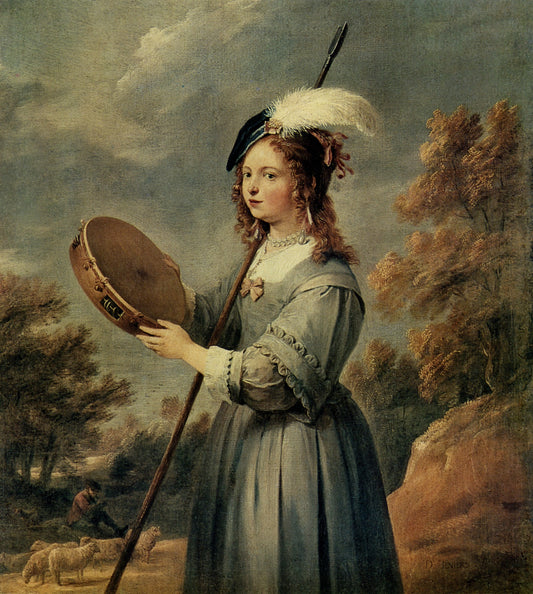
Teniers the Younger, David (1610-1690) - Shepherdess 1650s
Vendor:Digital Download - 1 imageRegular price £0.80Regular priceUnit price per -

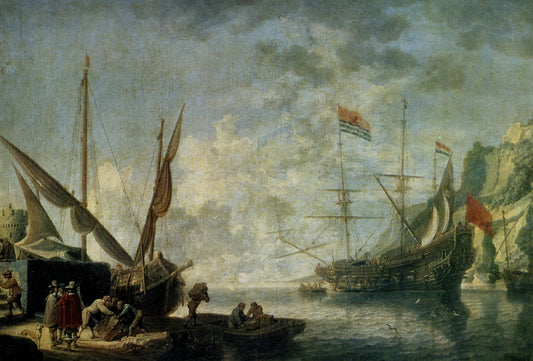
Teniers the Younger, David (1610-1690) - Sea Harbour 1650s
Vendor:Digital Download - 1 imageRegular price £0.80Regular priceUnit price per -

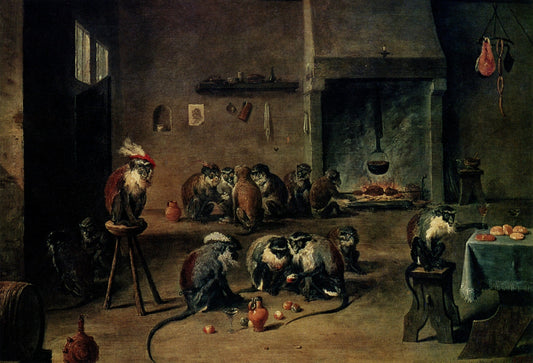
Teniers the Younger, David (1610-1690) - Monkeys in a Kitchen 1640s
Vendor:Digital Download - 1 imageRegular price £0.80Regular priceUnit price per -

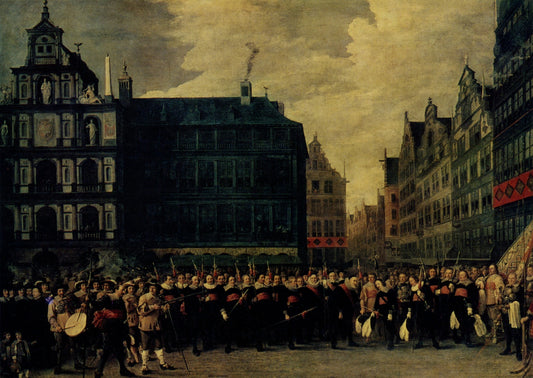
Teniers the Younger, David (1610-1690) - Members of the Antwerp Magistrate 1643
Vendor:Digital Download - 1 imageRegular price £0.80Regular priceUnit price per -

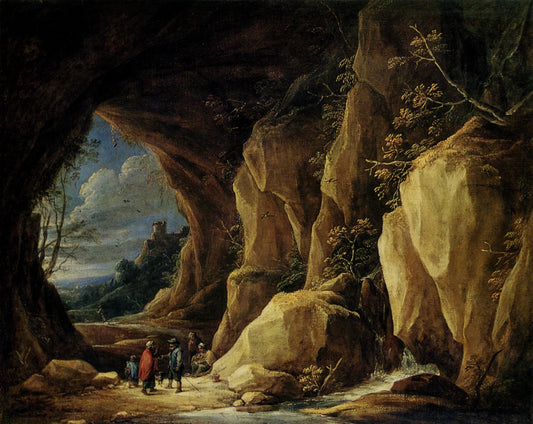
Teniers the Younger, David (1610-1690) - Landscape with a Grotto and Romanies c.1640
Vendor:Digital Download - 1 imageRegular price £0.80Regular priceUnit price per -

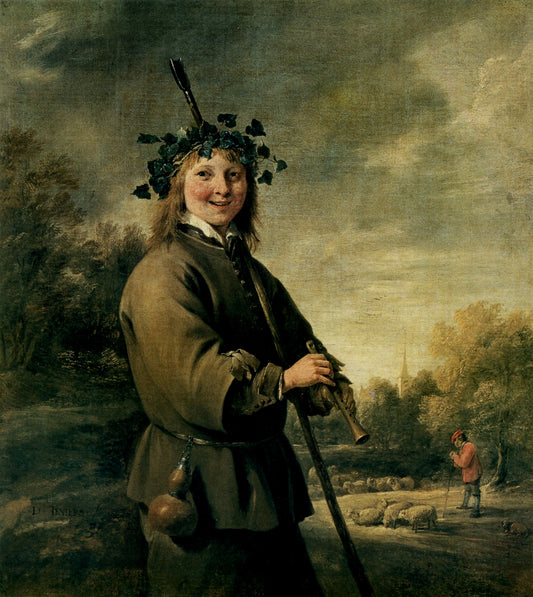
Teniers the Younger, David (1610-1690) - Shepherd 1650s
Vendor:Digital Download - 1 imageRegular price £0.80Regular priceUnit price per -

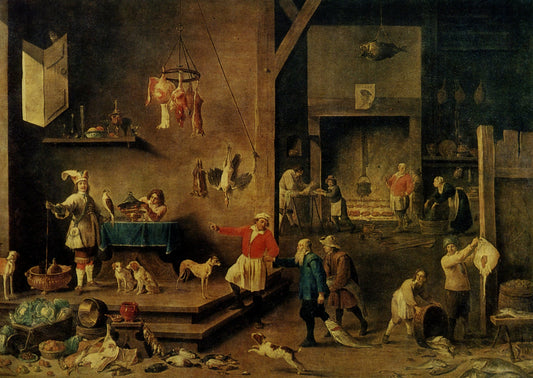
Teniers the Younger, David (1610-1690) - Kitchen 1646
Vendor:Digital Download - 1 imageRegular price £0.80Regular priceUnit price per -

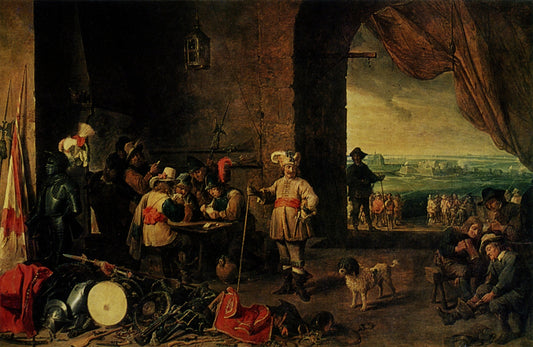
Teniers the Younger, David (1610-1690) - Guardroom 1642
Vendor:Digital Download - 1 imageRegular price £0.80Regular priceUnit price per -

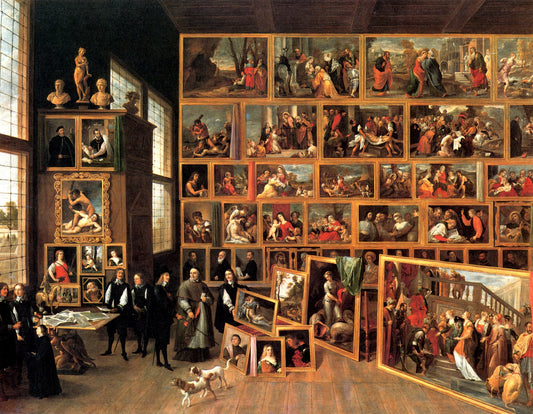
Teniers the Younger, David (1610-1690) - Gallery of Archduke Leopold-Wilhelm 1651
Vendor:Digital Download - 1 imageRegular price £0.80Regular priceUnit price per -

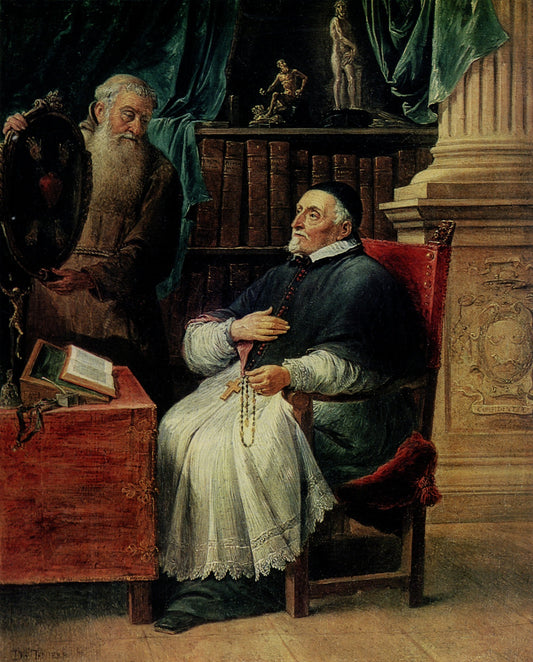
Teniers the Younger, David (1610-1690) - Gent's Bishop Antonius Triest and his Brother Eugene 1652
Vendor:Digital Download - 1 imageRegular price £0.80Regular priceUnit price per -

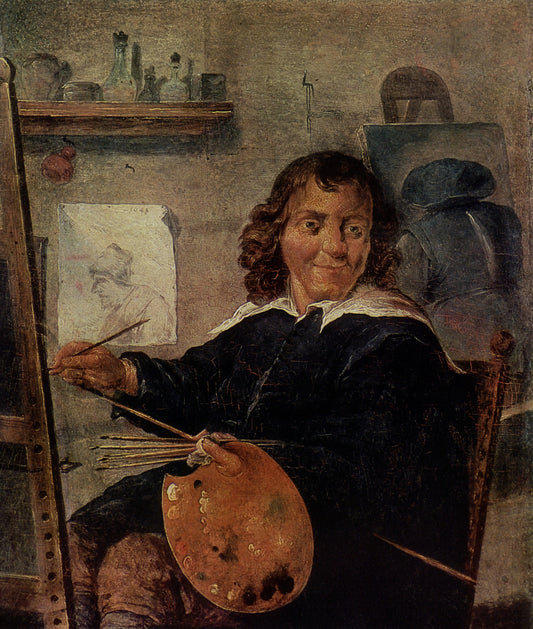
Teniers the Younger, David (1610-1690) - Artist in his Studio 1641
Vendor:Digital Download - 1 imageRegular price £0.80Regular priceUnit price per


Latest Picture Trove Blog Posts
View all-

Public Domain Artwork and Trade Marks: What You Need to Know
Artwork in the public domain can generally be reproduced, adapted and used commercially without copyright permission. However, copyright and trade mark rights are separate, and using a public-domain image in certain circumstances could still infringe an existing trade mark.
-

William Morris’s Strawberry Thief: The Story Behind a Classic Arts and Crafts Pattern
Few William Morris designs are as instantly recognisable as Strawberry Thief. With its richly patterned foliage, small red strawberries and watchful birds hidden among curling leaves, it has become one of the most loved designs of the Arts and Crafts movement.
-

Glasgow and the Mackintosh Style
We recently took ourselves off to Scotland, and on our travels, we popped into the Mackintosh Tea Rooms in Glasgow for a bit of a nose around and a spot of lunch.
Glasgow and the Mackintosh Style
We recently took ourselves off to Scotland, and on our travels, we popped into the Mackintosh Tea Rooms in Glasgow for a bit of a nose around and a spot of lunch.


