

Giulio Aristide Sartorio (1860–1932) was an Italian painter, illustrator and filmmaker whose work combined academic figure painting with Symbolist themes. Born in Rome, he became known for elaborate compositions inspired by mythology, literature and national history. His Gorgon and the Fallen Heroes (1893–98) draws on classical myth to explore beauty, danger and death. The work reflects the late nineteenth-century fascination with mysterious female figures and psychologically charged allegory. Sartorio also designed monumental decorative cycles, including a frieze for the Italian parliament. During the First World War he recorded military subjects as a war artist. He died in 1932.
Sartorio's Symbolist pictures use classical stories to explore subjects that preoccupied artists at the end of the nineteenth century: desire, death, heroism and the power of myth. His large compositions frequently include intertwined figures and elaborate decorative rhythms. In later public commissions he applied these skills to narratives of Italian history and national identity. His work as a war artist added another dimension to a career previously dominated by allegory. His activities in illustration and film also reflect the changing opportunities open to artists in early twentieth-century Italy.
Images to download
-

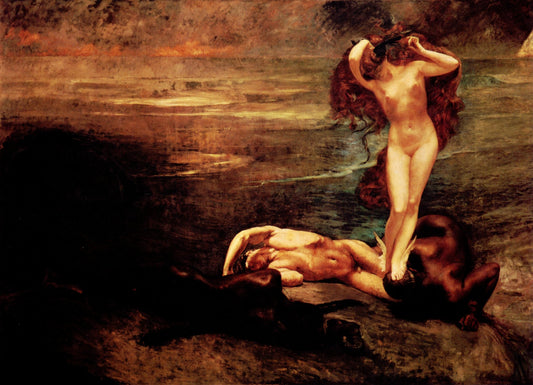
Sartorio, Giulio Aristide (1860-1932) - Gorgon and the Fallen Heroes 1893-1898
Vendor:Digital Download - 1 imageRegular price £0.80Regular priceUnit price per

Latest Picture Trove Blog Posts
View all-

Public Domain Artwork and Trade Marks: What You Need to Know
Artwork in the public domain can generally be reproduced, adapted and used commercially without copyright permission. However, copyright and trade mark rights are separate, and using a public-domain image in certain circumstances could still infringe an existing trade mark.
-

William Morris’s Strawberry Thief: The Story Behind a Classic Arts and Crafts Pattern
Few William Morris designs are as instantly recognisable as Strawberry Thief. With its richly patterned foliage, small red strawberries and watchful birds hidden among curling leaves, it has become one of the most loved designs of the Arts and Crafts movement.
-

Glasgow and the Mackintosh Style
We recently took ourselves off to Scotland, and on our travels, we popped into the Mackintosh Tea Rooms in Glasgow for a bit of a nose around and a spot of lunch.
Glasgow and the Mackintosh Style
We recently took ourselves off to Scotland, and on our travels, we popped into the Mackintosh Tea Rooms in Glasgow for a bit of a nose around and a spot of lunch.


