

James Sant (1820-1916) was a distinguished British painter, renowned for his sensitive portraiture and evocative depictions of children, women, and genre scenes. Born in Croydon, Surrey, Sant was the younger brother of the landscape painter George Sant, and from an early age displayed artistic promise. He began studying art under John Varley and later attended the Royal Academy Schools, where he honed his skills and developed a keen eye for detail and character.
Sant’s career took off in the mid-19th century, and he exhibited his first work at the Royal Academy in 1840. Over the following decades, he became a regular and prolific contributor to the Academy’s annual exhibitions. His portraits soon gained popularity for their delicate handling and emotional depth, particularly those of children, an area in which he excelled. Sant’s ability to capture the innocence and individuality of his young sitters set him apart from many of his contemporaries.
In 1871, Sant achieved one of the highest honours in British art when he was appointed as the official Portrait Painter in Ordinary to Queen Victoria. In this capacity, he painted numerous members of the royal family and aristocracy, further cementing his reputation as a leading portraitist of the Victorian era. His portraits of Queen Victoria’s grandchildren are especially celebrated for their charm and psychological insight.
Sant’s work was not limited to portraiture, however. He also painted allegorical and genre scenes, often imbued with a poetic sensibility and a soft, atmospheric quality. His style is characterised by a refined use of colour, subtle modelling, and a gentle, sometimes sentimental, approach to his subjects. He was influenced by the Pre-Raphaelite movement, which can be seen in the detailed backgrounds and naturalistic renderings in some of his works.
Elected as a Royal Academician in 1870, Sant remained active in artistic circles well into his later years. He continued to paint and exhibit until the age of ninety, making him one of the longest-serving Royal Academicians. Despite the changing tastes of the early 20th century, which favoured more modernist approaches, Sant’s paintings remained popular with the public for their technical skill and emotional warmth.
James Sant died in Lancaster Gate, London, in 1916, at the remarkable age of ninety-six. Today, his works can be found in major collections, including the National Portrait Gallery and the Tate, serving as a testament to his lasting contribution to British art.
Images to download
-

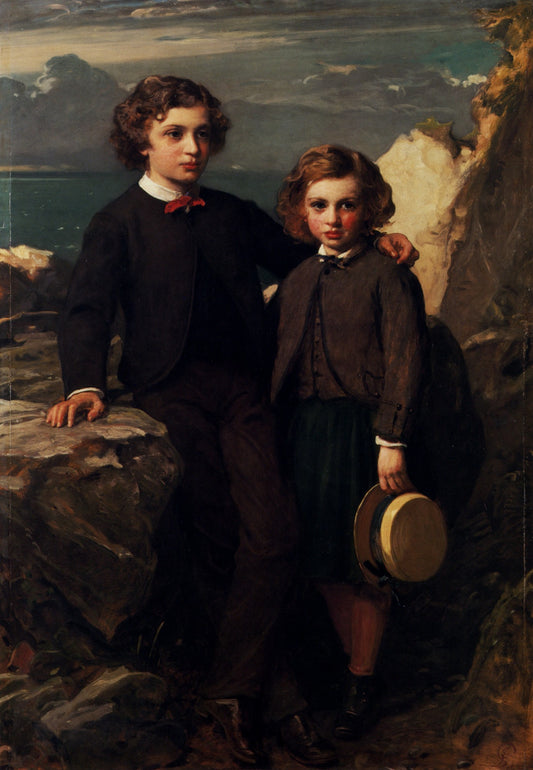
Sant, James (1820-1916) - The Honourable Julian and the Hon Lionel Bying 1890
Vendor:Digital Download - 1 imageRegular price £0.80Regular priceUnit price per -

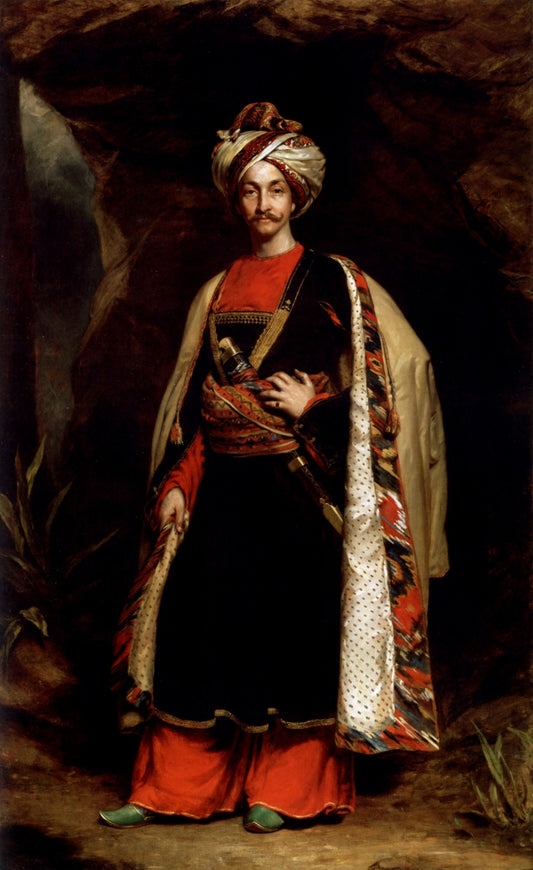
Sant, James (1820-1916) - Captain Colin Mackenzie c.1842-4
Vendor:Digital Download - 1 imageRegular price £0.80Regular priceUnit price per


Latest Picture Trove Blog Posts
View all-

William Morris’s Strawberry Thief: The Story Behind a Classic Arts and Crafts Pattern
Few William Morris designs are as instantly recognisable as Strawberry Thief. With its richly patterned foliage, small red strawberries and watchful birds hidden among curling leaves, it has become one of the most loved designs of the Arts and Crafts movement.
William Morris’s Strawberry Thief: The Story Behind a Classic Arts and Crafts Pattern
Few William Morris designs are as instantly recognisable as Strawberry Thief. With its richly patterned foliage, small red strawberries and watchful birds hidden among curling leaves, it has become one of the most loved designs of the Arts and Crafts movement.
-

Glasgow and the Mackintosh Style
We recently took ourselves off to Scotland, and on our travels, we popped into the Mackintosh Tea Rooms in Glasgow for a bit of a nose around and a spot of lunch.
Glasgow and the Mackintosh Style
We recently took ourselves off to Scotland, and on our travels, we popped into the Mackintosh Tea Rooms in Glasgow for a bit of a nose around and a spot of lunch.
-

A Trip to Edinburgh & Glasgow, and Scottish Art
We have just returned from a well-deserved few days' break in Scotland, visiting both Edinburgh and Glasgow, taking in Scottish art and tea rooms!
A Trip to Edinburgh & Glasgow, and Scottish Art
We have just returned from a well-deserved few days' break in Scotland, visiting both Edinburgh and Glasgow, taking in Scottish art and tea rooms!


