

Utagawa Kunisada (1786–1865) was a Japanese ukiyo-e artist and one of the most prolific designers of colour woodblock prints during the Edo period. Born in Edo, now Tokyo, he entered the workshop of Utagawa Toyokuni I, from whom he learnt the conventions of actor portraits and prints of fashionable women.
Kunisada began publishing designs in the early nineteenth century. His works include portraits of kabuki performers, scenes of courtesans, illustrations of literary subjects and images of everyday customs. He was particularly successful in portraying theatrical celebrities and the elaborate costumes worn on stage.
His Courtesan in a Morning Glory Robe reflects the fashion and decorative imagery of the pleasure quarters. The Winter print from Shiki no uchi (Four Seasons) belongs to a series exploring seasonal themes. The National Gallery of Victoria dates its impression of Winter to approximately 1830.
Kunisada often employed saturated colours, rhythmic outlines and carefully described patterned textiles. He worked with publishers and woodblock cutters whose collective efforts enabled designs to be printed in substantial numbers. His imagery offers detailed evidence of fashion, entertainment and popular culture in nineteenth-century Japan. His contemporary Andō Hiroshige worked in the same ukiyo-e tradition, although he is particularly associated with landscape prints.
In 1844 he adopted the professional name Toyokuni III, although the numbering of artists using the Toyokuni name has varied in historical accounts. He continued to produce prints into the 1860s and influenced numerous pupils and followers within the Utagawa school.
Kunisada died in Edo in January 1865. His enormous output and popularity made him a central figure in the commercial woodblock print culture of his time.
Images to download
-

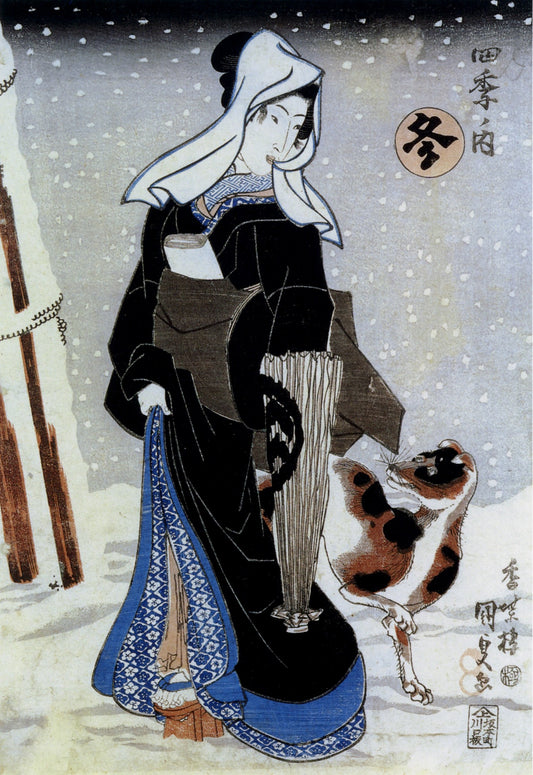
Kunisada, Utagawa (1786-1865) - Winter, from Shiki no uchi c.1835
Vendor:Digital Download - 1 imageRegular price £0.80Regular priceUnit price per -

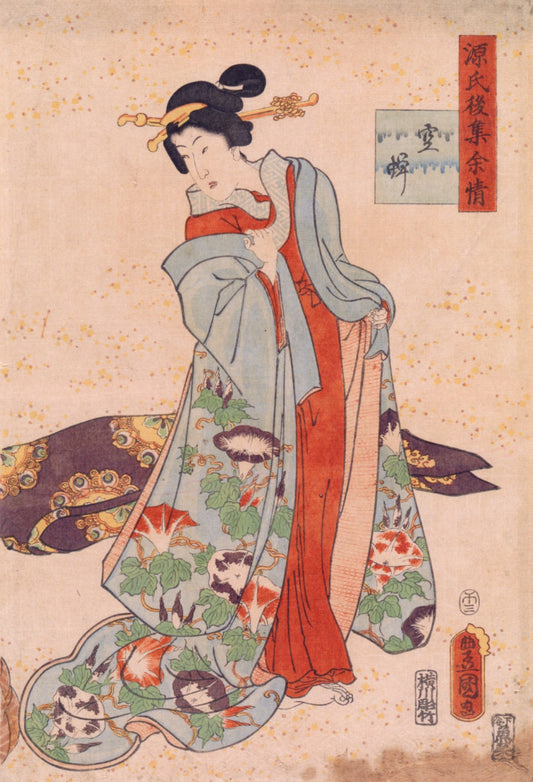
Kunisada, Utagawa (1786-1865) - Courtesan in a Morning Glory Robe
Vendor:Digital Download - 1 imageRegular price £0.80Regular priceUnit price per


Latest Picture Trove Blog Posts
View all-

Public Domain Artwork and Trade Marks: What You Need to Know
Artwork in the public domain can generally be reproduced, adapted and used commercially without copyright permission. However, copyright and trade mark rights are separate, and using a public-domain image in certain circumstances could still infringe an existing trade mark.
-

William Morris’s Strawberry Thief: The Story Behind a Classic Arts and Crafts Pattern
Few William Morris designs are as instantly recognisable as Strawberry Thief. With its richly patterned foliage, small red strawberries and watchful birds hidden among curling leaves, it has become one of the most loved designs of the Arts and Crafts movement.
-

Glasgow and the Mackintosh Style
We recently took ourselves off to Scotland, and on our travels, we popped into the Mackintosh Tea Rooms in Glasgow for a bit of a nose around and a spot of lunch.
Glasgow and the Mackintosh Style
We recently took ourselves off to Scotland, and on our travels, we popped into the Mackintosh Tea Rooms in Glasgow for a bit of a nose around and a spot of lunch.


