

Sir George Hayter (1792–1871) was a British portrait and history painter who became one of the principal visual chroniclers of the early Victorian court. He is best known for his portraits of Queen Victoria and for large ceremonial paintings recording important events in British political and royal life. His detailed compositions preserve the appearances of many leading figures of the period.
Hayter was born in London on 17 December 1792, the son of Charles Hayter, a miniature painter and drawing master. He entered the Royal Academy Schools in 1808 and initially worked in miniature painting and portraiture. His father’s connections with the royal household helped him secure commissions, and in 1815 George was appointed painter of miniatures and portraits to Princess Charlotte and her husband, Prince Leopold.
With support from the Duke of Bedford, Hayter travelled to Italy in 1816 to extend his artistic training. He studied in Rome and was admitted to the Accademia di San Luca. The experience encouraged his ambition to undertake large-scale historical compositions, rather than confining himself to miniatures. He returned to London in 1818 and developed a successful portrait practice.
Among his early historical works was The Trial of Queen Caroline, a crowded composition bringing together numerous recognisable public figures. Hayter returned to Italy in 1826 and spent time in Paris before settling again in England in the early 1830s. His formidable skill in arranging and painting groups of identifiable people made him particularly suited to recording contemporary events.
His ambitious depiction of the House of Commons during the first Reformed Parliament included hundreds of individual portraits and occupied him for many years. Following Queen Victoria’s accession in 1837, he was appointed her painter of portraits and history. He subsequently painted the young monarch’s coronation, her marriage to Prince Albert in 1840, and a formal state portrait.
In 1841 Hayter became Principal Painter-in-Ordinary to the Queen, and he was knighted in 1842. Although he enjoyed considerable royal patronage, he was never elected a member of the Royal Academy. His position at court gradually weakened as Victoria and Albert increasingly favoured the portraitist Franz Xaver Winterhalter.
Hayter continued working as a portrait painter and draughtsman in later life. He died in London in 1871. His paintings remain valuable both as accomplished examples of nineteenth-century portraiture and as visual records of a transformative period in British history, documenting the faces, clothing and ceremonies of the royal household and political establishment.
Images to download
-

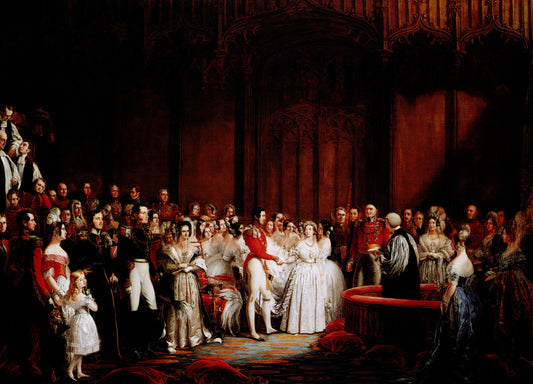
Hayter, George (1792-1871) - Marriage of Victoria & Albert 1840
Vendor:Digital Download - 1 imageRegular price £0.80Regular priceUnit price per -

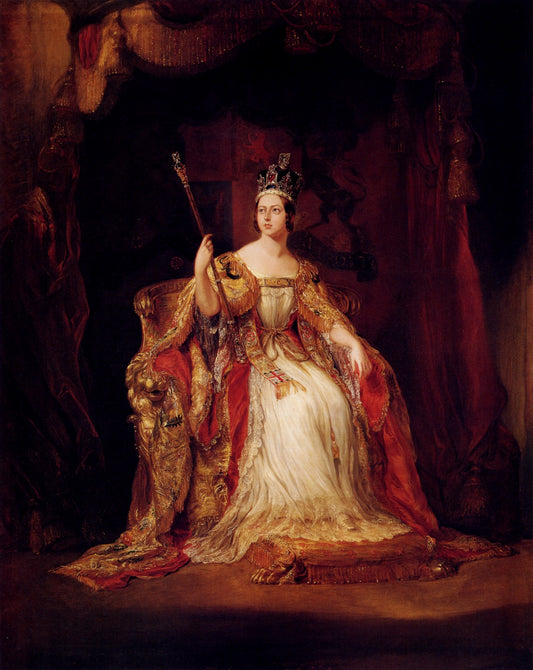
Hayter, George (1792-1871) - Queen Victoria 1840
Vendor:Digital Download - 1 imageRegular price £0.80Regular priceUnit price per -

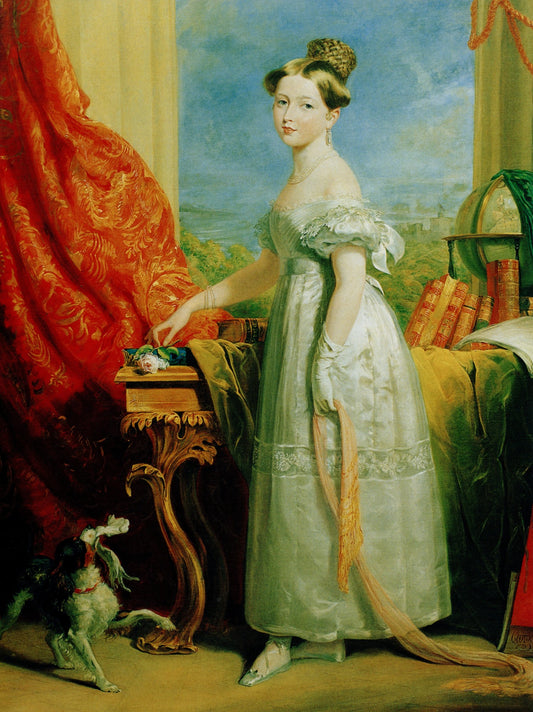
Hayter, George (1792-1871) - Queen Victoria aged 14 with her dog Dash 1833
Vendor:Digital Download - 1 imageRegular price £0.80Regular priceUnit price per -

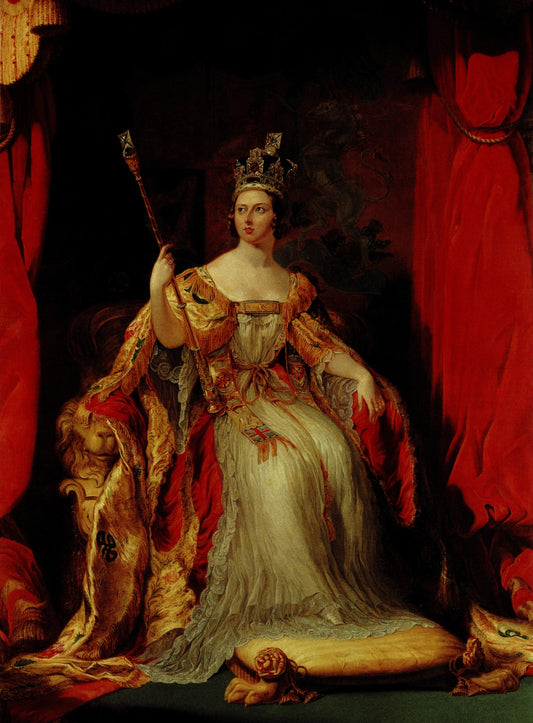
Hayter, George (1792-1871) - Queen Victoria in her Coronation Robes 1838
Vendor:Digital Download - 1 imageRegular price £0.80Regular priceUnit price per -


Queen Victoria Collection - 60 High Resolution Images
Vendor:Digital Download - 60 imagesRegular price £4.00Regular priceUnit price per


Latest Picture Trove Blog Posts
View all-

William Morris’s Strawberry Thief: The Story Behind a Classic Arts and Crafts Pattern
Few William Morris designs are as instantly recognisable as Strawberry Thief. With its richly patterned foliage, small red strawberries and watchful birds hidden among curling leaves, it has become one of the most loved designs of the Arts and Crafts movement.
-

Glasgow and the Mackintosh Style
We recently took ourselves off to Scotland, and on our travels, we popped into the Mackintosh Tea Rooms in Glasgow for a bit of a nose around and a spot of lunch.
Glasgow and the Mackintosh Style
We recently took ourselves off to Scotland, and on our travels, we popped into the Mackintosh Tea Rooms in Glasgow for a bit of a nose around and a spot of lunch.
-

A Trip to Edinburgh & Glasgow, and Scottish Art
We have just returned from a well-deserved few days' break in Scotland, visiting both Edinburgh and Glasgow, taking in Scottish art and tea rooms!
A Trip to Edinburgh & Glasgow, and Scottish Art
We have just returned from a well-deserved few days' break in Scotland, visiting both Edinburgh and Glasgow, taking in Scottish art and tea rooms!


