

William Etty (1787–1849) was an English painter celebrated for his history paintings and studies of the human figure. Born in York on 10 March 1787, he was apprenticed to a printer in Hull before moving to London in 1805 to pursue art.
He entered the Royal Academy Schools and studied briefly with Sir Thomas Lawrence. Etty admired the Venetian painters, particularly Titian, and developed a distinctive approach to colour and the painting of flesh. He travelled to France and Italy, studying works in major collections and working directly from life models.
His breakthrough came with The Arrival of Cleopatra in Cilicia, exhibited at the Royal Academy in 1821. He was elected a Royal Academician in 1828. His large historical and mythological compositions drew praise for their colour and technique but also criticism because of their extensive use of nudity.
Throughout his career Etty attended life classes, producing numerous studies that reveal his close attention to light, anatomy and the modelling of skin. Examples include Female Nude Standing (c.1825–30), Study of a Male Nude (1830s–40s) and Study of a Standing Female Nude (1830s–40s). His studies demonstrate an enduring commitment to observation rather than simply idealised classical forms.
Etty also painted portraits, landscapes and smaller subjects. In 1848 he returned to York, where he had long been involved in efforts to preserve the city's historic buildings. He died there on 13 November 1849. His work occupies an unusual position in nineteenth-century British painting because of his sustained interest in the nude as a subject in its own right.
Images to download
-

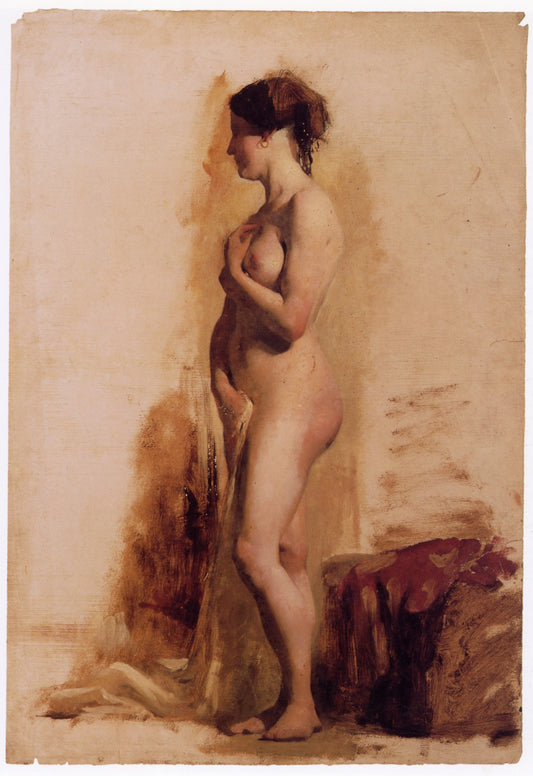
Etty, William (1787-1849) - Study of a Standing Female Nude 1830s-40s
Vendor:Digital Download - 1 imageRegular price £0.80Regular priceUnit price per -

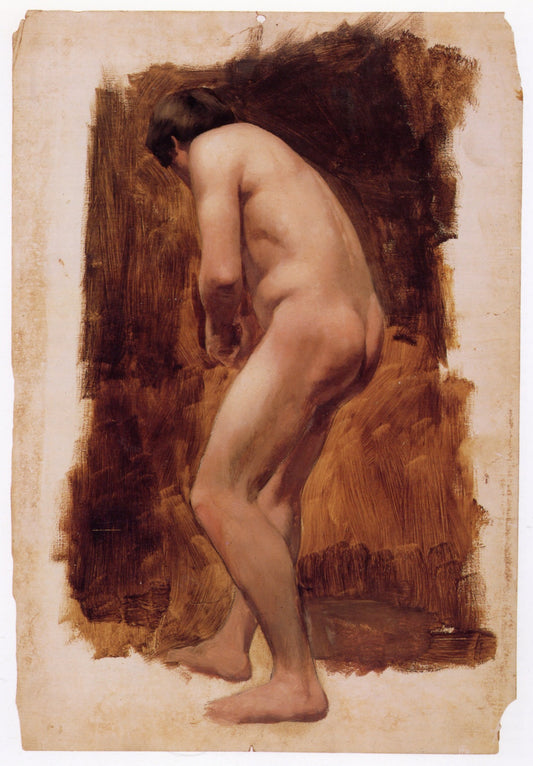
Etty, William (1787-1849) - Study of a Male Nude 1830s-40s
Vendor:Digital Download - 1 imageRegular price £0.80Regular priceUnit price per -

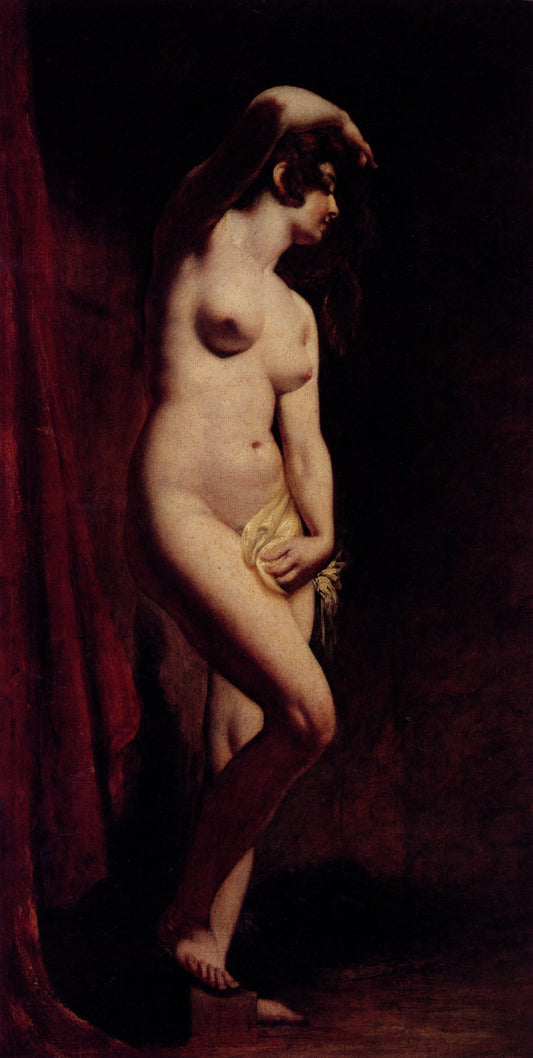
Etty, William (1787-1849) - Female nude standing c.1825-30
Vendor:Digital Download - 1 imageRegular price £0.80Regular priceUnit price per


Latest Picture Trove Blog Posts
View all-

Public Domain Artwork and Trade Marks: What You Need to Know
Artwork in the public domain can generally be reproduced, adapted and used commercially without copyright permission. However, copyright and trade mark rights are separate, and using a public-domain image in certain circumstances could still infringe an existing trade mark.
-

William Morris’s Strawberry Thief: The Story Behind a Classic Arts and Crafts Pattern
Few William Morris designs are as instantly recognisable as Strawberry Thief. With its richly patterned foliage, small red strawberries and watchful birds hidden among curling leaves, it has become one of the most loved designs of the Arts and Crafts movement.
-

Glasgow and the Mackintosh Style
We recently took ourselves off to Scotland, and on our travels, we popped into the Mackintosh Tea Rooms in Glasgow for a bit of a nose around and a spot of lunch.
Glasgow and the Mackintosh Style
We recently took ourselves off to Scotland, and on our travels, we popped into the Mackintosh Tea Rooms in Glasgow for a bit of a nose around and a spot of lunch.


