

The Ashcan School was an influential artistic movement in the United States during the early 20th century, renowned for its gritty and realistic portrayals of urban life. Although the movement originated in New York City, its impact was felt nationwide, and it marked a significant shift away from the idealised landscapes and genteel subjects that had previously dominated American art. The Ashcan artists sought to capture the dynamic energy, diversity, and sometimes harsh realities of modern city living, often depicting working-class neighbourhoods, crowded streets, and scenes from everyday life.
The term "Ashcan School" was initially used as a pejorative, referencing the artists’ choice of subject matter: back alleys, tenements, and the detritus of urban existence.
The movement is closely linked to "The Eight": an artist collective that exhibited together in 1908 at the Macbeth Gallery in New York to protest the conservative, juried standards of the National Academy of Design. However, "The Eight" and the Ashcan School are not identical groups: only five members of The Eight painted in the core Ashcan style, while the other three followed different modern or impressionist approaches.
Key Players of the Ashcan School/The Eight:
Robert Henri (1865-1929): Often regarded as the leader of the movement, inspired the Ashcan style and exhibited with 'The Eight'.
John Sloan (1871-1951): Known for lively street, tenement, and working-class scenes. Exhibited with 'The Eight'.
George Luks (1867-1933): Luks brought a bold, expressive style to working life. Exhibited with 'The Eight'.
William Glackens (1870-1938): Glackens contributed a lighter palette and a more impressionistic approach. Exhibited with 'The Eight'.
Everett Shinn (1876-1953): Painted theatrical stages, nightlife, and urban grit. Exhibited with 'The Eight'.
Arthur Bowen Davies (1862-1928): Painter of poetic, symbolic landscapes and figures. Did not exhibit with 'The Eight'.
Ernest Lawson (1873-1939): Impressionistic landscape painter. Did not exhibit with 'The Eight'.
Maurice Prendergast (1858-1924): Post-impressionist known for bright, mosaic-like park and leisure scenes. Did not exhibit with 'The Eight'.
Beyond the core Philadelphia group and The Eight, several other prominent artists were vital to the Ashcan School aesthetic and legacy:
George Bellows (1882-1925): Famous for his dynamic scenes of urban life and boxing matches.
Edward Hopper (1882-1967): Studied under Robert Henri and incorporated early Ashcan urban realism before developing his own iconic style of solitude and light.
Jerome Myers (1867-1940): Known for his compassionate portrayals of immigrant life and street gatherings on the Lower East Side.
Glenn Coleman (1887-1932): Painter of Greenwich Village street scenes, cafes, and neighborhood characters.
Eugene Higgins (1874-1958): Depicted the struggles of the urban poor, homeless, and marginalised.
Images to download
-


Maurice Prendergast 36 High Resolution Images
Vendor:Digital Download - 36 imagesRegular price £3.00Regular priceUnit price per -

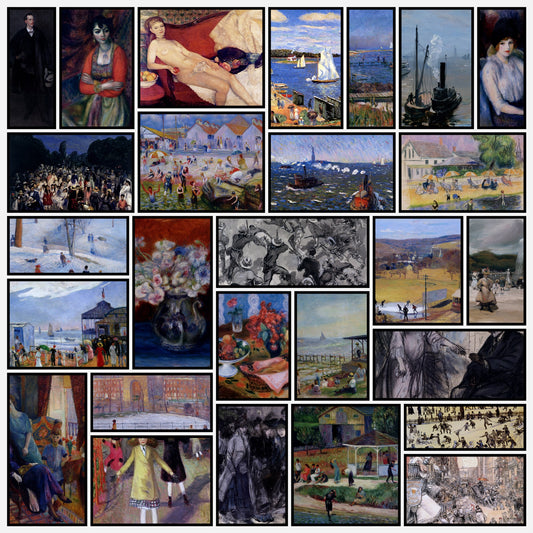
William Glackens 60 High Resolution Images
Vendor:Digital Download - 60 imagesRegular price £5.00Regular priceUnit price per -


George Bellows 75 High Resolution Images
Vendor:Digital Download - 75 imagesRegular price £5.00Regular priceUnit price per -


Bellows, George (1882-1925) - Stag at Sharkey's 1909
Vendor:Digital Download - 1 imageRegular price £0.80Regular priceUnit price per -


Prendergast, Maurice (1859-1924) - The Grand Canal, Venice 1898-99
Vendor:Digital Download - 1 imageRegular price £1.00Regular priceUnit price per -


Henri, Robert (1865-1929) - Miguel of Tesuque
Vendor:Digital Download - 1 imageRegular price £0.80Regular priceUnit price per -


Henri, Robert (1865-1929) - Figure in Motion 1913
Vendor:Digital Download - 1 imageRegular price £0.80Regular priceUnit price per -


Lawson, Ernest (1873-1939) - Spring Night, Harlem River 1913
Vendor:Digital Download - 1 imageRegular price £0.80Regular priceUnit price per -


Shinn, Everett (1876-1953) - Rip Van Winkle 1939
Vendor:Digital Download - 1 imageRegular price £0.80Regular priceUnit price per -


Shinn, Everett (1876-1953) - The White Ballet 1904
Vendor:Digital Download - 1 imageRegular price £0.80Regular priceUnit price per -


Shinn, Everett (1876-1953) - Orchestre Pit, Old Proctor's Theatre c.1906-7
Vendor:Digital Download - 1 imageRegular price £0.80Regular priceUnit price per -


Prendergast, Maurice (1859-1924) - Square of San Marco, Venice 1899
Vendor:Digital Download - 1 imageRegular price £1.00Regular priceUnit price per -


Prendergast, Maurice (1859-1924) - Neponset Bay c.1914
Vendor:Digital Download - 1 imageRegular price £0.80Regular priceUnit price per -

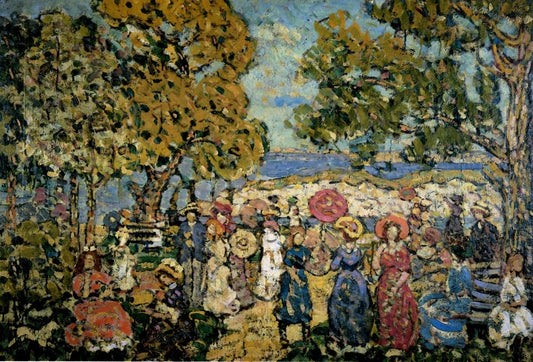
Prendergast, Maurice (1859-1924) - Landscape with Figures c.1912
Vendor:Digital Download - 1 imageRegular price £0.80Regular priceUnit price per -


Prendergast, Maurice (1859-1924) - Dieppe 1892
Vendor:Digital Download - 1 imageRegular price £0.80Regular priceUnit price per -


Sloan, John (1871-1951) - Music in the Plaza 1920
Vendor:Digital Download - 1 imageRegular price £0.80Regular priceUnit price per -


Sloan, John (1871-1951) - East at Sunset 1921
Vendor:Digital Download - 1 imageRegular price £0.80Regular priceUnit price per -


Sloan, John (1871-1951) - Chama Running Red 1927
Vendor:Digital Download - 1 imageRegular price £0.80Regular priceUnit price per -


Sloan, John (1871-1951) - Women drying their hair 1912
Vendor:Digital Download - 1 imageRegular price £0.80Regular priceUnit price per -


Sloan, John (1871-1951) - Hairdresser's Window 1907
Vendor:Digital Download - 1 imageRegular price £0.80Regular priceUnit price per -

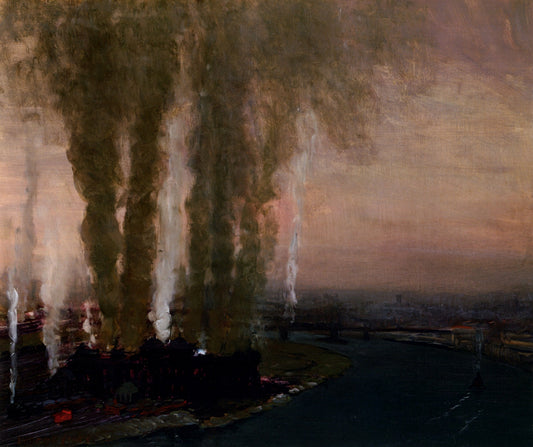
Luks, George (1867-1933) - Roundhouse at High Bridge 1909-10
Vendor:Digital Download - 1 imageRegular price £0.80Regular priceUnit price per -

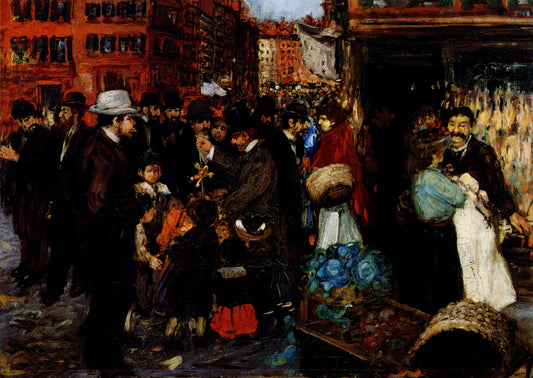
Luks, George (1867-1933) - Hester Street 1905
Vendor:Digital Download - 1 imageRegular price £0.80Regular priceUnit price per -


Henri, Robert (1865-1929) - Cumulus Clouds, East River 1901-2
Vendor:Digital Download - 1 imageRegular price £0.80Regular priceUnit price per -


Henri, Robert (1865-1929) - Spanish Girl of Manhattan 1908
Vendor:Digital Download - 1 imageRegular price £0.80Regular priceUnit price per -


Henri, Robert (1865-1929) - Segovia Girl 1912
Vendor:Digital Download - 1 imageRegular price £0.80Regular priceUnit price per -


Henri, Robert (1865-1929) - Portrait of Thomas Anshutz 1906
Vendor:Digital Download - 1 imageRegular price £0.80Regular priceUnit price per -


Henri, Robert (1865-1929) - On the Marne 1899
Vendor:Digital Download - 1 imageRegular price £0.80Regular priceUnit price per -


Henri, Robert (1865-1929) - Market Place, Paris 1897
Vendor:Digital Download - 1 imageRegular price £0.80Regular priceUnit price per -


Henri, Robert (1865-1929) - Maria y Consuelo (Mother & Child) 1907
Vendor:Digital Download - 1 imageRegular price £0.80Regular priceUnit price per -


Henri, Robert (1865-1929) - Blue-eyed Man 1910
Vendor:Digital Download - 1 imageRegular price £0.80Regular priceUnit price per -


Henri, Robert (1865-1929) - Alice Mumford 1893
Vendor:Digital Download - 1 imageRegular price £0.80Regular priceUnit price per -


Henri, Robert (1865-1929) - Snow in New York 1902
Vendor:Digital Download - 1 imageRegular price £0.80Regular priceUnit price per -


Henri, Robert (1865-1929) - Eva Green 1907
Vendor:Digital Download - 1 imageRegular price £0.80Regular priceUnit price per -


Bellows, George (1882-1925) - The White Horse 1922
Vendor:Digital Download - 1 imageRegular price £0.80Regular priceUnit price per -


Bellows, George (1882-1925) - The Germans Arrive 1918
Vendor:Digital Download - 1 imageRegular price £0.80Regular priceUnit price per -


Bellows, George (1882-1925) - The Big Dory 1913
Vendor:Digital Download - 1 imageRegular price £0.80Regular priceUnit price per -


Bellows, George (1882-1925) - Nude with Hexagonal Quilt 1924
Vendor:Digital Download - 1 imageRegular price £0.80Regular priceUnit price per -


Bellows, George (1882-1925) - Two Women 1924
Vendor:Digital Download - 1 imageRegular price £0.80Regular priceUnit price per -


Bellows, George (1882-1925) - Mrs T in Wine Silk 1919
Vendor:Digital Download - 1 imageRegular price £0.80Regular priceUnit price per -


Bellows, George (1882-1925) - Emma at the Piano 1914
Vendor:Digital Download - 1 imageRegular price £0.80Regular priceUnit price per -


Bellows, George (1882-1925) - Emma and her Children 1923
Vendor:Digital Download - 1 imageRegular price £0.80Regular priceUnit price per -


Bellows, George (1882-1925) - Elinor, Jean and Anne 1920
Vendor:Digital Download - 1 imageRegular price £0.80Regular priceUnit price per -


Bellows, George (1882-1925) - New York 1911
Vendor:Digital Download - 1 imageRegular price £0.80Regular priceUnit price per -


Bellows, George (1882-1925) - The Palisades 1909
Vendor:Digital Download - 1 imageRegular price £0.80Regular priceUnit price per -


Bellows, George (1882-1925) - Winter Afternoon 1909
Vendor:Digital Download - 1 imageRegular price £0.80Regular priceUnit price per -


Bellows, George (1882-1925) - Snow-capped River 1911
Vendor:Digital Download - 1 imageRegular price £0.80Regular priceUnit price per -


Bellows, George (1882-1925) - Love of Winter 1914
Vendor:Digital Download - 1 imageRegular price £0.80Regular priceUnit price per -


Bellows, George (1882-1925) - Easter Snow 1915
Vendor:Digital Download - 1 imageRegular price £0.80Regular priceUnit price per


Latest Picture Trove Blog Posts
View all-

William Morris’s Strawberry Thief: The Story Behind a Classic Arts and Crafts Pattern
Few William Morris designs are as instantly recognisable as Strawberry Thief. With its richly patterned foliage, small red strawberries and watchful birds hidden among curling leaves, it has become one of the most loved designs of the Arts and Crafts movement.
-

Glasgow and the Mackintosh Style
We recently took ourselves off to Scotland, and on our travels, we popped into the Mackintosh Tea Rooms in Glasgow for a bit of a nose around and a spot of lunch.
Glasgow and the Mackintosh Style
We recently took ourselves off to Scotland, and on our travels, we popped into the Mackintosh Tea Rooms in Glasgow for a bit of a nose around and a spot of lunch.
-

A Trip to Edinburgh & Glasgow, and Scottish Art
We have just returned from a well-deserved few days' break in Scotland, visiting both Edinburgh and Glasgow, taking in Scottish art and tea rooms!
A Trip to Edinburgh & Glasgow, and Scottish Art
We have just returned from a well-deserved few days' break in Scotland, visiting both Edinburgh and Glasgow, taking in Scottish art and tea rooms!


